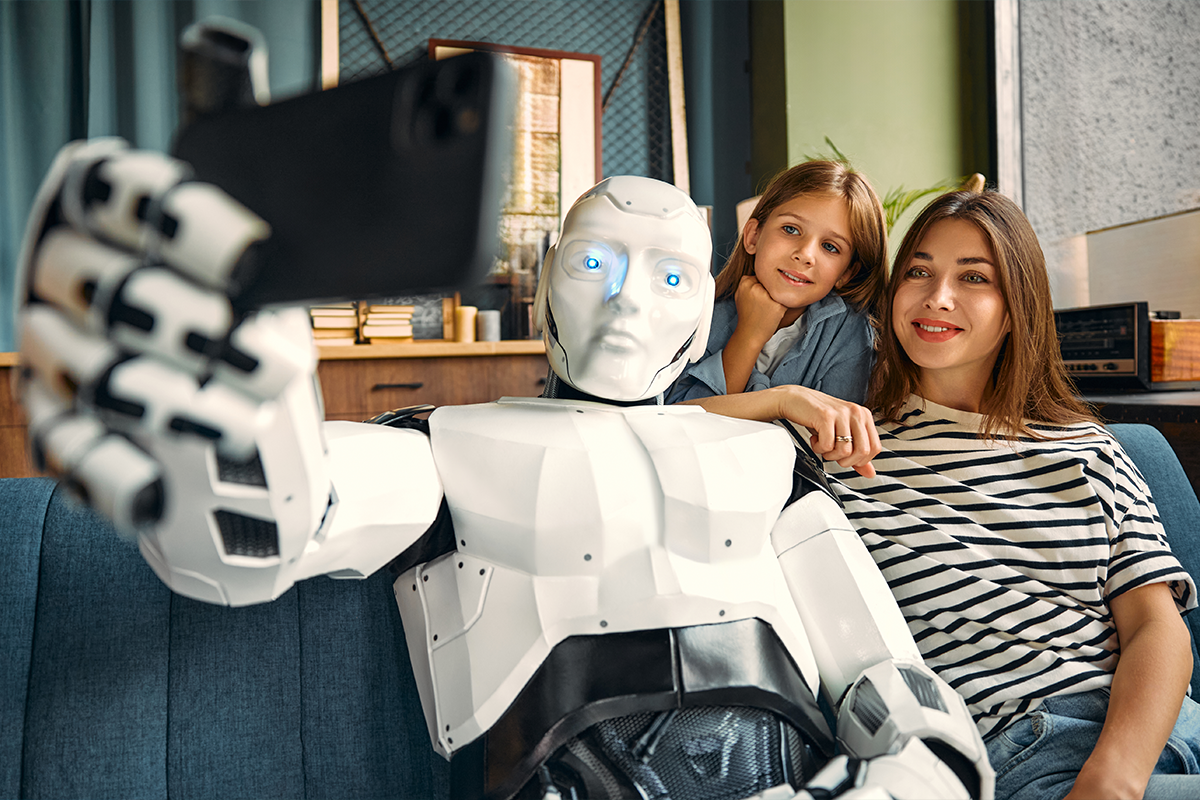
There’s a line I love: machines can mimic everything about us except the meaning of our experience. It’s neat, but too tidy. Machines are getting frighteningly good at mimicry. They can write in our voices, paint in our styles, and personalise interactions down to our little unconscious ticks. Those capacities force a question that isn’t new but feels urgent: what, in the end, makes us human?
We could answer with theology, philosophy, neuroscience — and each gives a partial reply. I prefer a practical test: watch how we behave when something tries to copy us. What matters most to us? What are we unwilling to hand over? Those things point toward the core.
Simulation without experience
AI composes sonnets, but it does not stand at a kitchen window watching its child sleep. It can recommend coping strategies for grief, but it will never carry the ache of loss. That difference is one of experience. Machines do not undergo life, they process it as data.
That gap isn’t trivial. Experience is integrative: it blends memory, body, culture and meaning. It creates context. A human’s moral judgement is often rooted in slow, messy lived history, not in instant pattern matching. So while machines simulate behaviour, they lack the embodied background that gives our choices depth.
The value of vulnerability
Another mark of humanity is vulnerability. To be human is to be fragile to others, to risk shame and glory. We form relationships that are risky because we care enough to be honest. Machines can mimic empathy, but they don’t risk anything by being present. They don’t negotiate the reciprocity that makes relationships transformative.
That reciprocity is also the soil for trust, moral growth and communal bonds. When we offload emotional labour to algorithms, we risk losing the messy negotiations that make us moral agents.
Creativity and surprise
People often say AI is creative. In one sense that’s true: AI produces combinations that surprise us. But creativity in humans is not just novelty; it’s the expression of lived concerns — the way a protest song channels anger, or a painting carries a history. Machines can mimic the surface of creativity but not the embeddedness of human purpose.
That said, AI’s capability challenges us to revalue creativity not as a proprietary human trophy but as a shared enterprise. If a machine helps me see something new, that’s a gift. The ethical response is to use that gift to deepen our humanity, not to outsource it.
Machines as a mirror
Here’s a beautiful paradox: as machines become more human-like, they function as a mirror reminding us of what we truly prize. They hold up our words and styles and force us to ask whether the surface is enough. Do we want people to speak eloquently but feel nothing? Or do we prize messy authenticity?
Machines help highlight our blind spots. When a chatbot simulates compassion, we notice the texture of authentic compassion more clearly. When an algorithm recommends art, we ask whether meaning is curated or manufactured.
A future of enhanced humanity
The fear that machines will replace us rests on one assumption: that human value is measured by output efficiency. But if we recognise human value in vulnerability, moral judgement, creativity with purpose and shared meaning, then machines are not competitors so much as collaborators. They free us from drudgery and give us time to be more human.
That future is not inevitable. It depends on choices: workplace design, cultural norms, and public policy that values leisure and relational work as real contributions. It depends on education that teaches ethics and empathy as much as technical skills. It depends on an economy that doesn’t measure human worth only by productivity.
The practice of being human
If you’re wondering how to respond in your life today, consider this: double down on what machines can’t meaningfully replicate. Practice being slow: long conversations, unstructured listening, commitments that require vulnerability. Cultivate moral habits: saying sorry, taking responsibility, wrestling with hard choices in public. Those practices are small but powerful ways to anchor humanity in a world of impressive mimicry.
Parting thought
AI will continue to blur lines. It will make mimicry better and more accessible. That’s not a reason to fear; it’s a reason to choose. We can decide to use these tools to amplify our best qualities — empathy, curiosity and moral imagination — or we can let the market pull us toward efficiency at the cost of meaning.
For me, the core of being human in the age of machines is not some metaphysical claim. It’s a practice: how we choose to spend our attention, whom we choose to include in our stories, and how we answer when machines ask us to remember what counts. If we keep those practices, we have every reason to be hopeful.